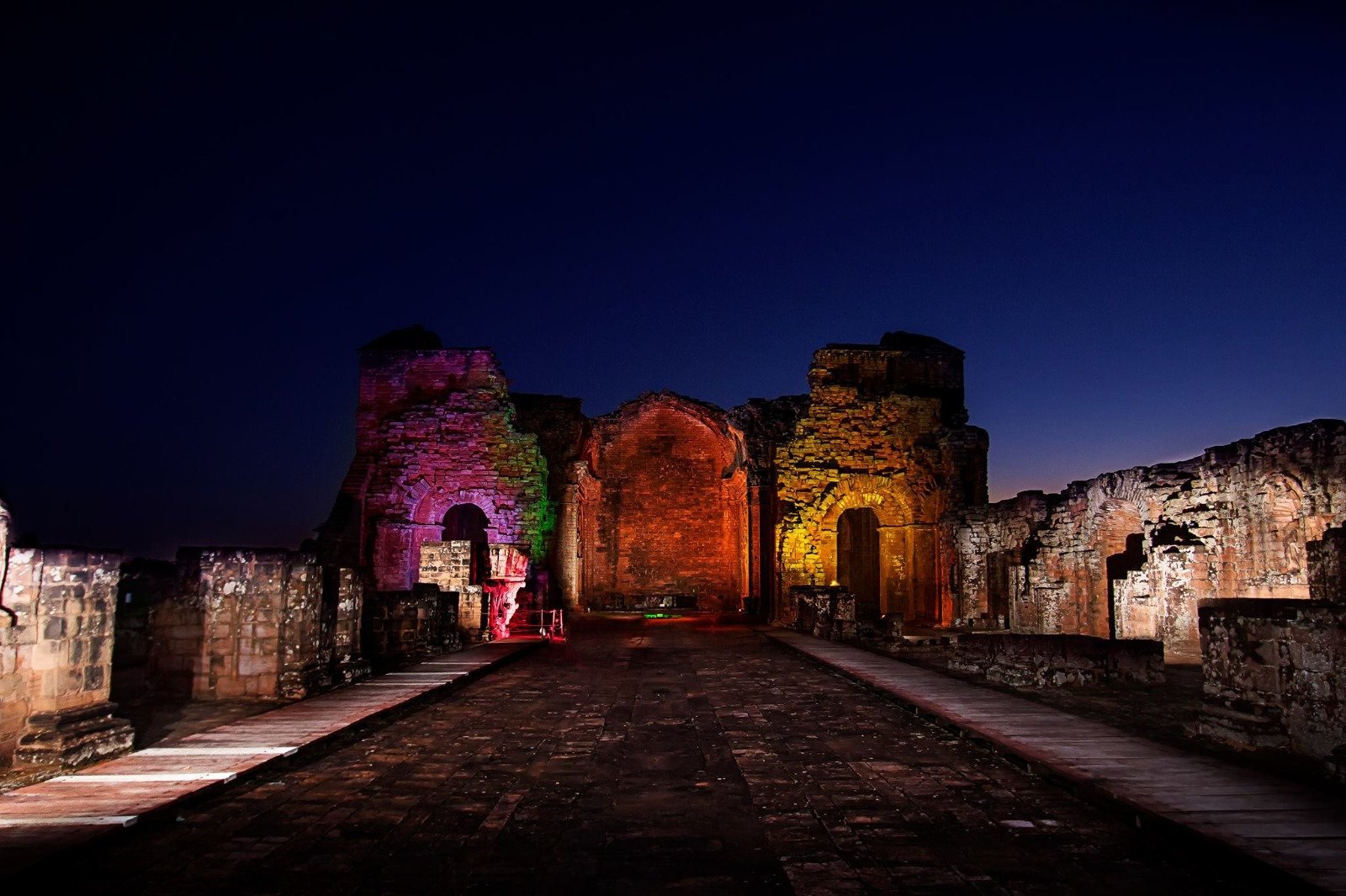
The ruins of La Santísima Trinidad del Paraná lit up at night, with a stone street leading to the church

Itapúa · Encarnación · Paraguay

Jesuit Missions

From heritage to a living history.

World HeritageTrinidad and Jesús, according to UNESCO
1 full dayWithin 2 to 3 nights in Itapúa
Three missionsEach with its role in the story
With a specialistHistorian, archaeologist or heritage guide

Not visiting ruins. Understanding a civilisation.

The Jesuit Missions are not an archaeological excursion. They are a story about urban planning, music, art, work, faith, power, education and production, and about the encounter —also the tension— between the Jesuit world and Guaraní societies.

We want you to leave understanding how a mission was organised, what role the Guaraní population played and why this chapter remains part of Paraguayan identity.

Rigorous, human and understandable: without an endless academic lecture and without a romantic view that erases historical complexity.

The three places

Each mission with its role

We do not try to see them all in a day. We choose two for the essential day and reserve the third as an extension.

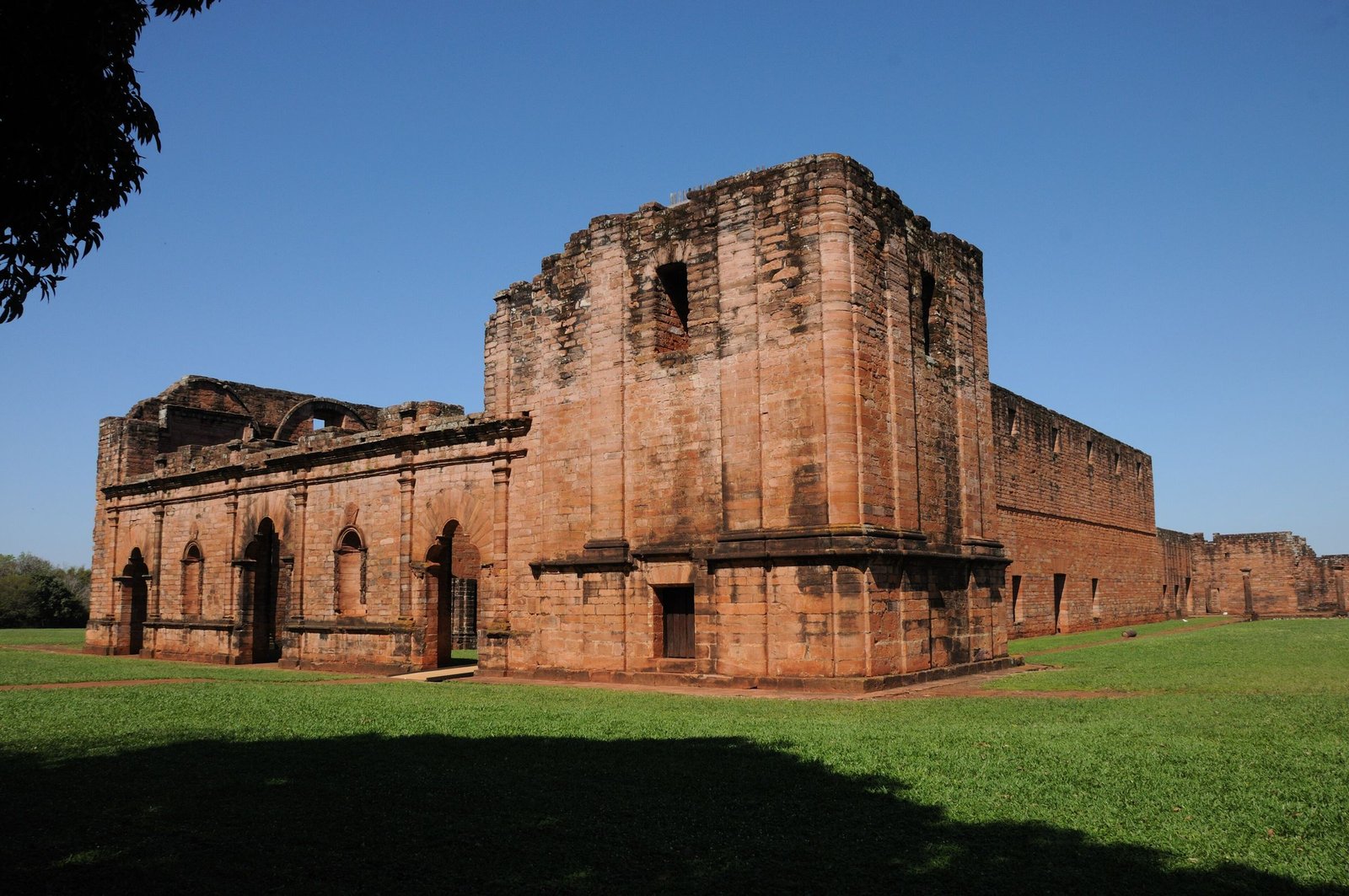
The façade of the great unfinished church of Jesús de TavarangüéIn the morning

Jesús de Tavarangüé

Scale and the unfinished project

We start here. Its great unfinished church lets us explain the ambition of the system, the architecture and the abrupt end after the expulsion of the Jesuits. A very powerful visual entrance.

The nave of the church of Trinidad with the wooden path between the wallsSunset and night

La Santísima Trinidad del Paraná

The emotional heart

The great close. Here we tell how a reduction worked as a city: square, church, homes, workshops and collective life. The last light of the afternoon and, when it is operating, the night tour are the memorable moment.

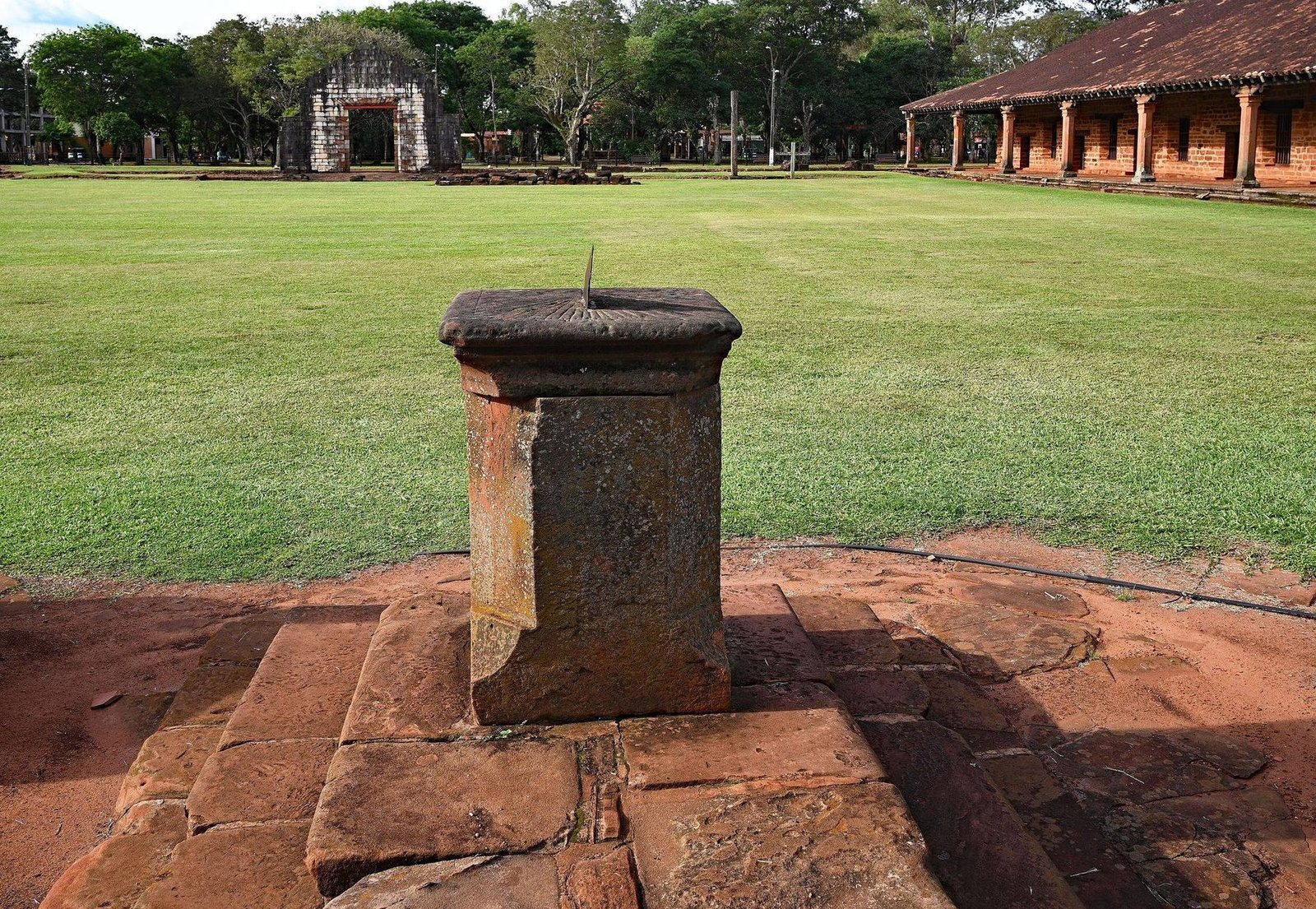
The historic sundial of San Cosme y San DamiánPremium extension

San Cosme y San Damián

Science, sky and a different perspective

Mission, astronomy and night sky. It adds a story that neither of the other two offers.

The Jesuit astronomer Buenaventura Suárez worked there, building his own instruments with the help of Guaraní craftsmen. His sundial survives and there is a restored observatory.

The main day

How a day in the Missions is lived

Jesús in the morning, Trinidad as evening falls and, between the two, time for the story to settle.

  1. 01

    Morning · Jesús

    We arrive before the busiest hours, whenever operations allow. A tour with a specialist: architecture, the scale of the temple, the urban project and the end of the reductions. Time for photography and silence.

  2. 02

    Midday · A table with territory

    A relaxed lunch with Itapúa produce, preferably with a host, producer or kitchen with a story. Not a generic restaurant merely because it is nearby.

  3. 03

    Afternoon · Transition

    A pause, a conversation or a chosen stop. We avoid filling the day with more monuments: the rhythm prepares the main moment.

  4. 04

    Sunset · Trinidad

    We enter with the last light. A deep tour with a historian, archaeologist or specialist guide: the square, the church, the homes, social organisation, art, music and everyday life.

  5. 05

    Night · Trinidad

    When the night programme is available, we include it as an emotional close: not as an isolated spectacle, but as the culmination of everything told during the day.

The host

Matters more than the monument

We need someone able to connect the stones with the people: who can explain, without oversimplifying, how the communities were organised, what the Guaraní contributed and preserved, how the workshops and music worked, and what happened after the expulsion of the Society of Jesus.

  • Historian
  • Archaeologist
  • Researcher
  • Heritage guide
The nave of the church of Trinidad, with the wooden path between the walls
The nave of Trinidad
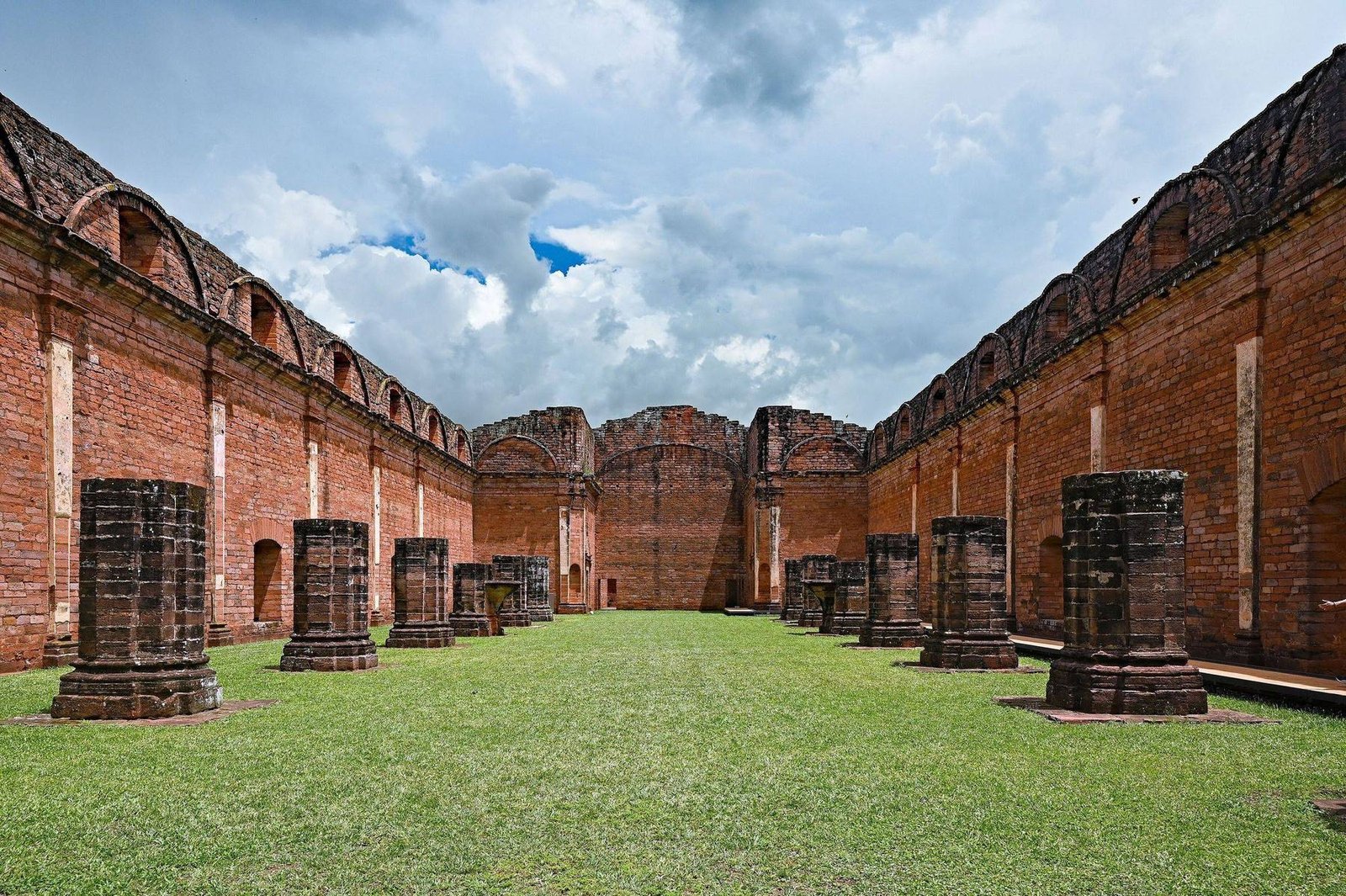
The façade of the great unfinished church of Jesús de Tavarangüé
The unfinished church of Jesús
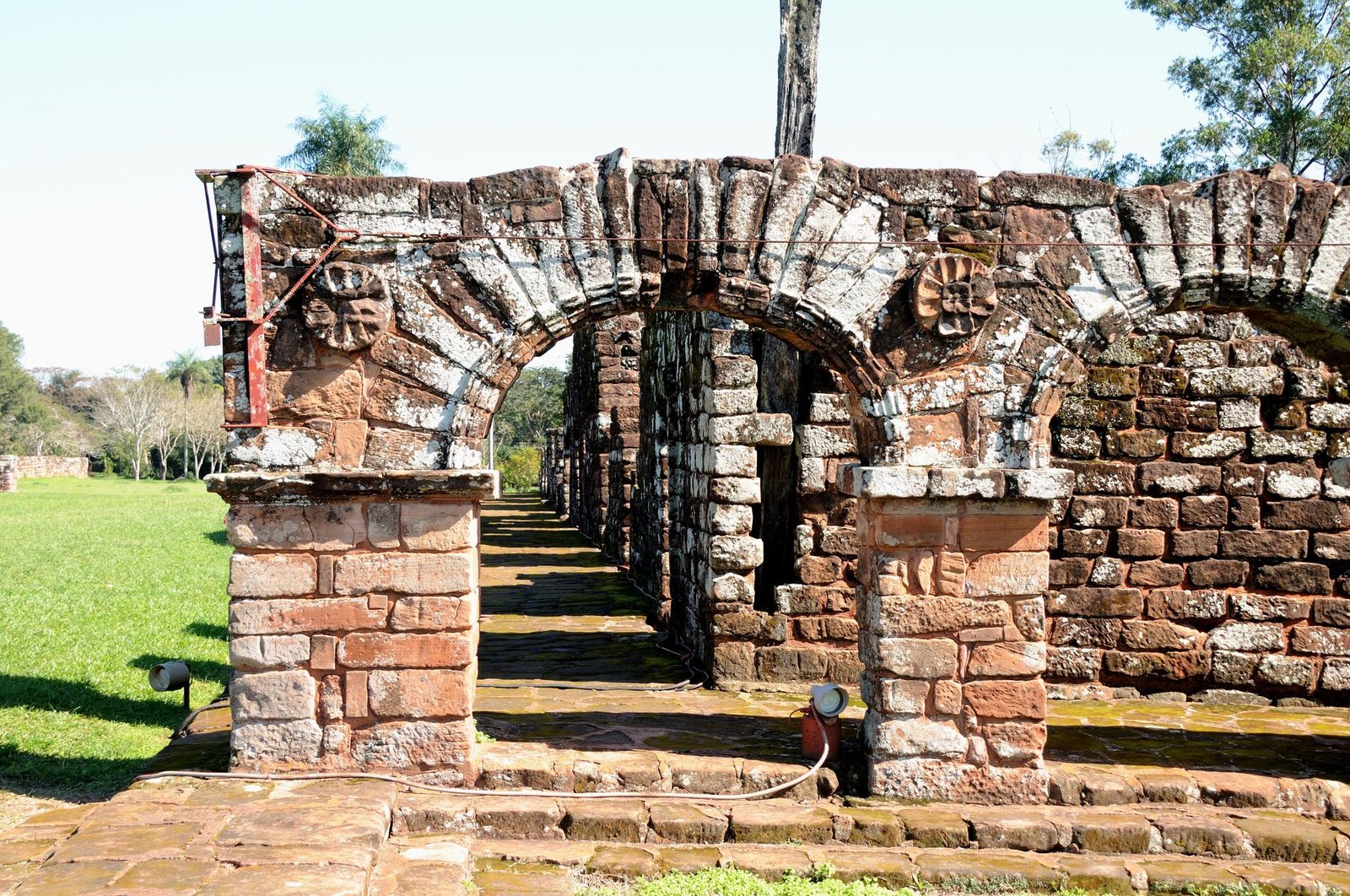
A decorated doorway in the homes of the Guaraní caciques of Trinidad
The doorway of the Guaraní homes
The interior of the ruined church of Jesús, with its columns and reddish stone walls
Inside the church of Jesús
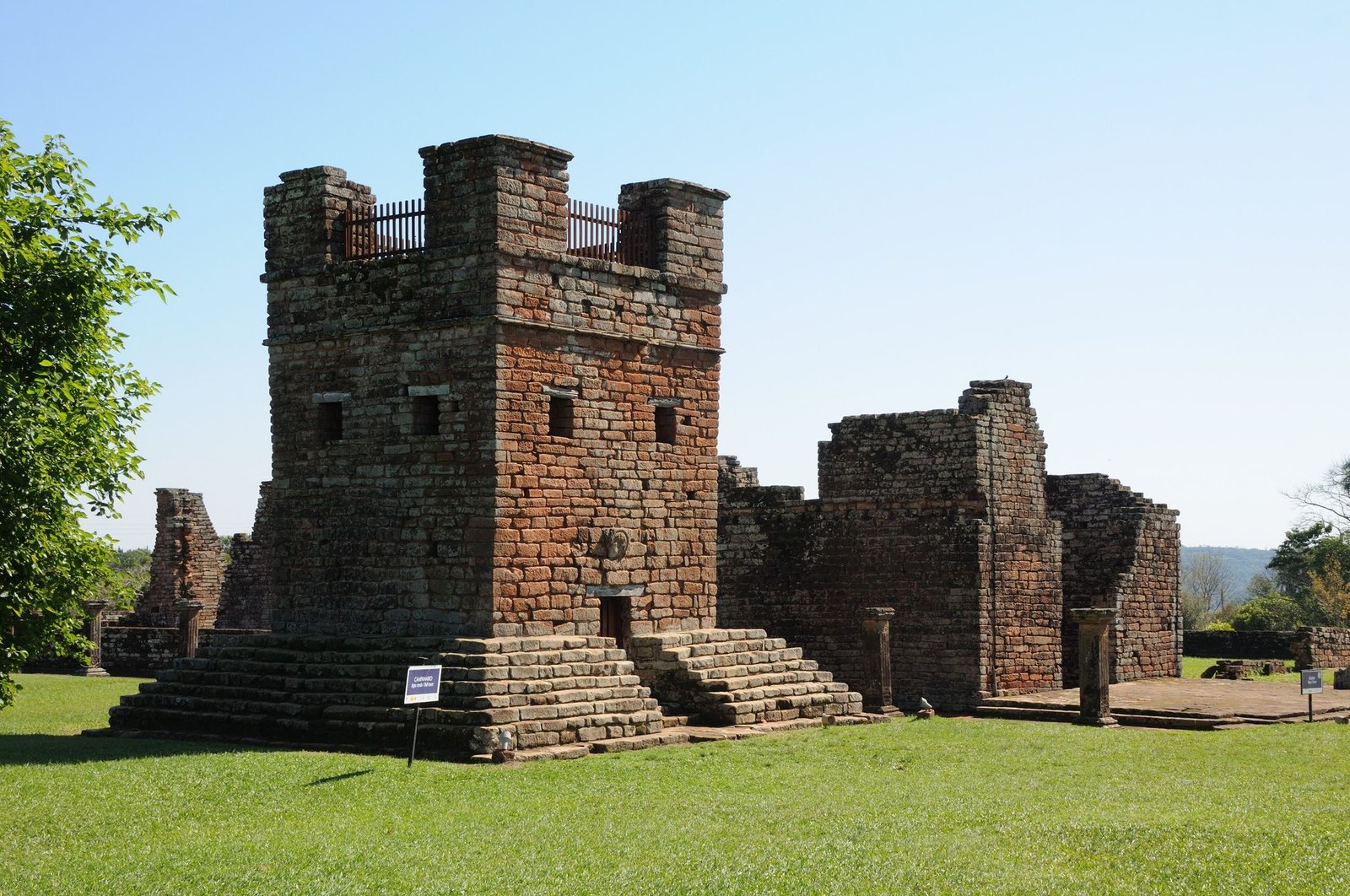
The bell tower of the old church of Trinidad
The bell tower
The historic sundial of San Cosme y San Damián
The sundial of San Cosme
The wall of the high altar of Trinidad, with a large brick arch
The high altar of Trinidad
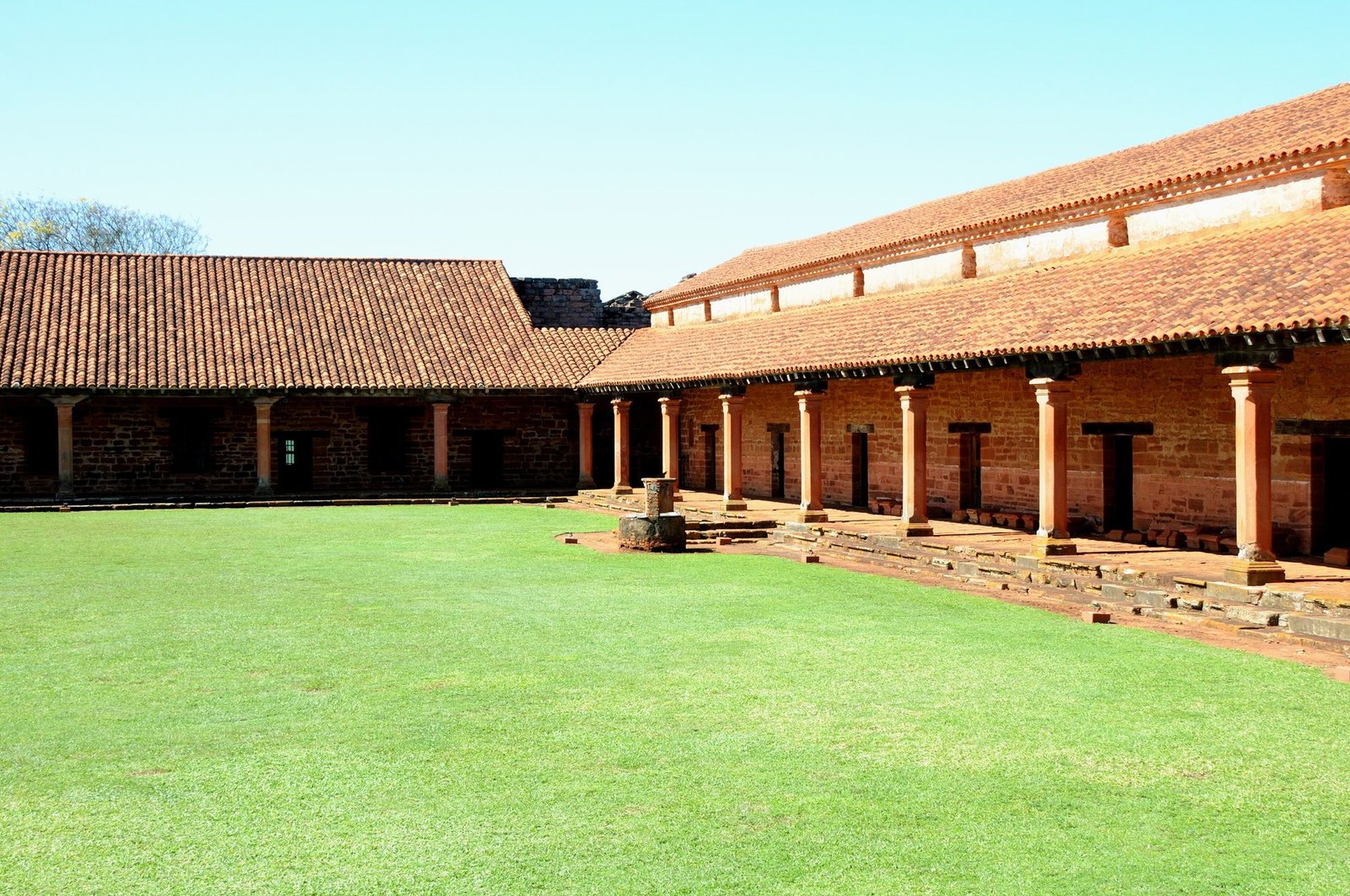
The courtyard and workshops of the mission of San Cosme y San Damián
Courtyard and workshops of San Cosme

An important decision

Guaraní history and living Guaraní culture are not the same

We do not mix the Missions with Ñande Reko Itapúa as though they were an automatic tourist continuity. The Missions explain a Jesuit-Guaraní historical chapter. Ñande Reko Itapúa presents a contemporary Mbya Guaraní community, in its own voice, under its own rules and control. That separation makes the whole more respectful and more interesting.

  1. Jesuit MissionsWhat happened and what it meant
  2. Ñande Reko ItapúaHow a Guaraní community lives and expresses itself today, in its own voice

Formats

Fewer places, more depth

Jesús, Trinidad and San Cosme in a single day would go against our rule. That is why the main product is a full day, within a block of 2 to 3 nights in Itapúa.

The essential daySAPC Missions

Jesús + Trinidad

1 full day

From morning to night: Jesús with its scale and its unfinished project, a table in Itapúa and Trinidad at sunset, with a night-time close when available.

SAPC Missions

Mission, Science and Stars

Half a day or full day

An extension to San Cosme y San Damián: the mission, the astronomer Buenaventura Suárez, the observatory and the night sky. For those who love science, astronomy or night photography.

SAPC Itapúa

Itapúa block

2 to 3 nights

Missions, Ñande Reko Itapúa and, later on, a yerba mate experience, without turning the three into a race.

Times, reservations, fees and the availability of night visits depend on SENATUR and are reconfirmed for each date. There is a Plan B for rain, heat or closures.

The detail

The details that add up

Small decisions that change how the day is remembered.

Mission notebook

A printed sheet with a simple historical map, three keys to the day and space for notes; not a generic tourist leaflet.

Music with context

A brief performance linked to the mission repertoire, only if it can be done with quality and without theatricality.

Photography in the best light

A schedule designed for light, heat and calm, not just for the available hours.

An Itapúa table

A meal that explains the territory and local production, with a host or a kitchen with a story.

Night-time close

Trinidad at dusk as a final memory. If the night visit does not operate, we design a worthy alternative close.

Always a plan B

Planned for rain, heat or closures, with the same care.

Our standard

What you will never find on this journey

Our standard is also defined by what we give up.

  • “Photo and next”: fifteen minutes at each ruin to complete a list.
  • A guide who recites dates without explaining how people lived.
  • A simple story of “Jesuits who civilised the Guaraní”.
  • Carelessly mixing the reductions with the present reality of Indigenous communities.
  • Three missions in a day just to say you saw them all.
  • Shows, costumes or artificial re-enactments.
Now I understand why this chapter is essential to understanding Paraguay.

Let us begin

Request your private experience

Every journey is designed from a conversation. Tell us who is travelling, when and what you would like to understand; an adviser will contact you personally to shape your proposal.

No packages. No fixed itineraries.