Ɨshɨr
People of Alto Paraguay
They have inhabited the Bahía Negra and Fuerte Olimpo area for about 500 years. In the 2002 census, 1,571 people identified as Ishir.
 SAPC
Bahía Negra · Alto Paraguay · Paraguay
To be welcomed by a people, not to visit them.
A SAPC exclusive experience · With the approval of the caciques
An exclusive experience
The Yshir decide who enters their villages and how. Today, SAPC is the only operator with the approval of the caciques to bring travellers and share an experience with them.
Every visit is agreed with them. Without their consent, there is no journey.
What is shared, what is photographed, how many people come and when: the community defines it.
Contributions and purchases agreed with the families who receive the traveller, without intermediaries.
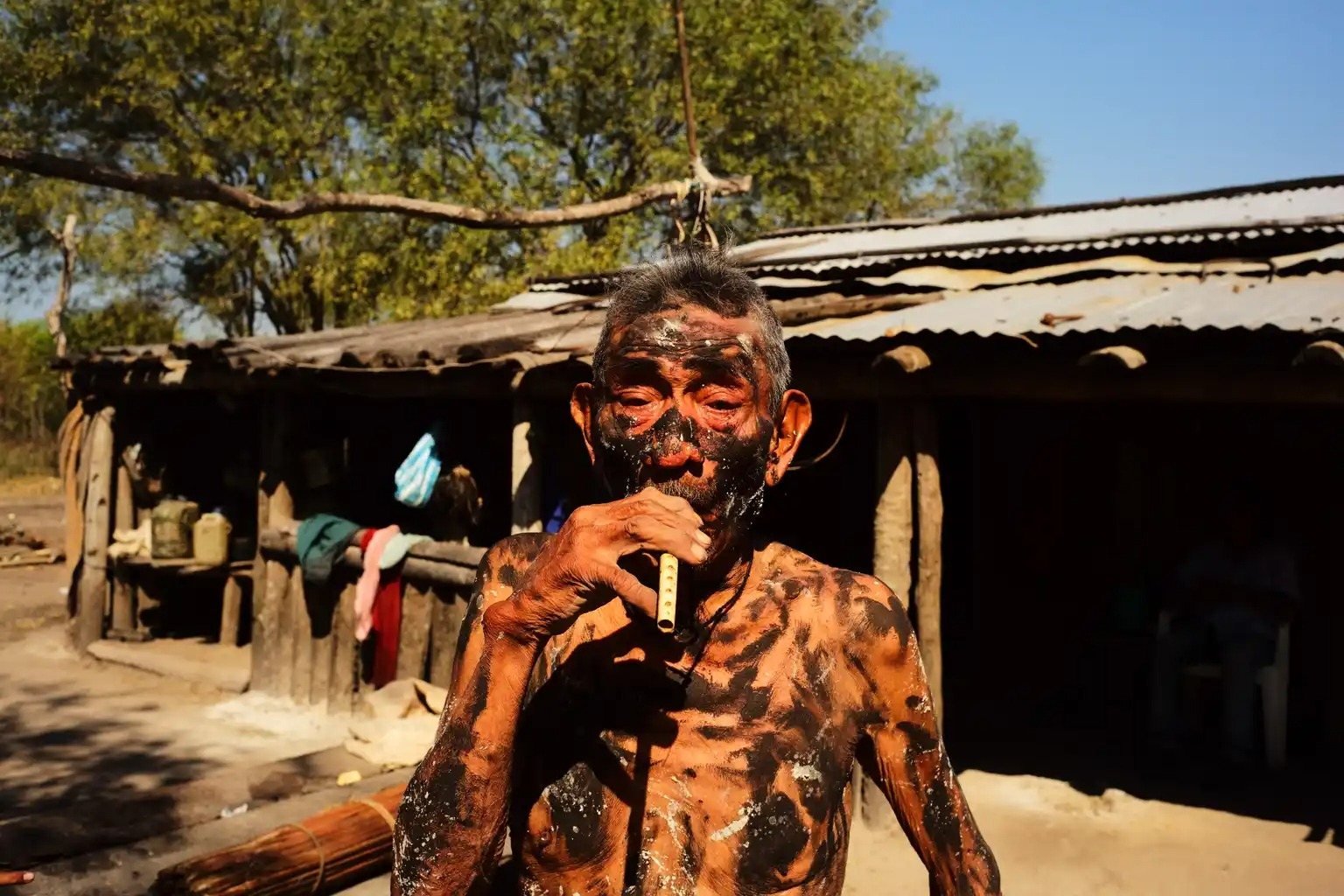
The Yshir —Ishir, which in their language means “person”— have lived for centuries beside the Paraguay River, in the far north of the Chaco, at the gates of the Pantanal. They number about two thousand people, according to the available figures.
Our proposal is simple: arrive with time, listen before asking and share with those who choose to share. There is no show prepared for tourists. What happens is an encounter between people.
Who they are
Before arriving, it is worth knowing with whom you will be speaking.
People of Alto Paraguay
They have inhabited the Bahía Negra and Fuerte Olimpo area for about 500 years. In the 2002 census, 1,571 people identified as Ishir.
Of the river and of the forest
The Ybytoso lived on the banks of the Paraguay River and the Tomáraho inland. Today they share communities such as Puerto Esperanza.
An endangered language
It belongs to the Zamuco family, related to Ayoreo. UNESCO considers it endangered, and the migration of young people to the cities is part of the challenge.
Stories that explain the world
According to their myth, the hero Nemur created the Paraguay River. They also have a particular knowledge of the sky, which is now shared at the Bahía Negra observatory.
Feather art
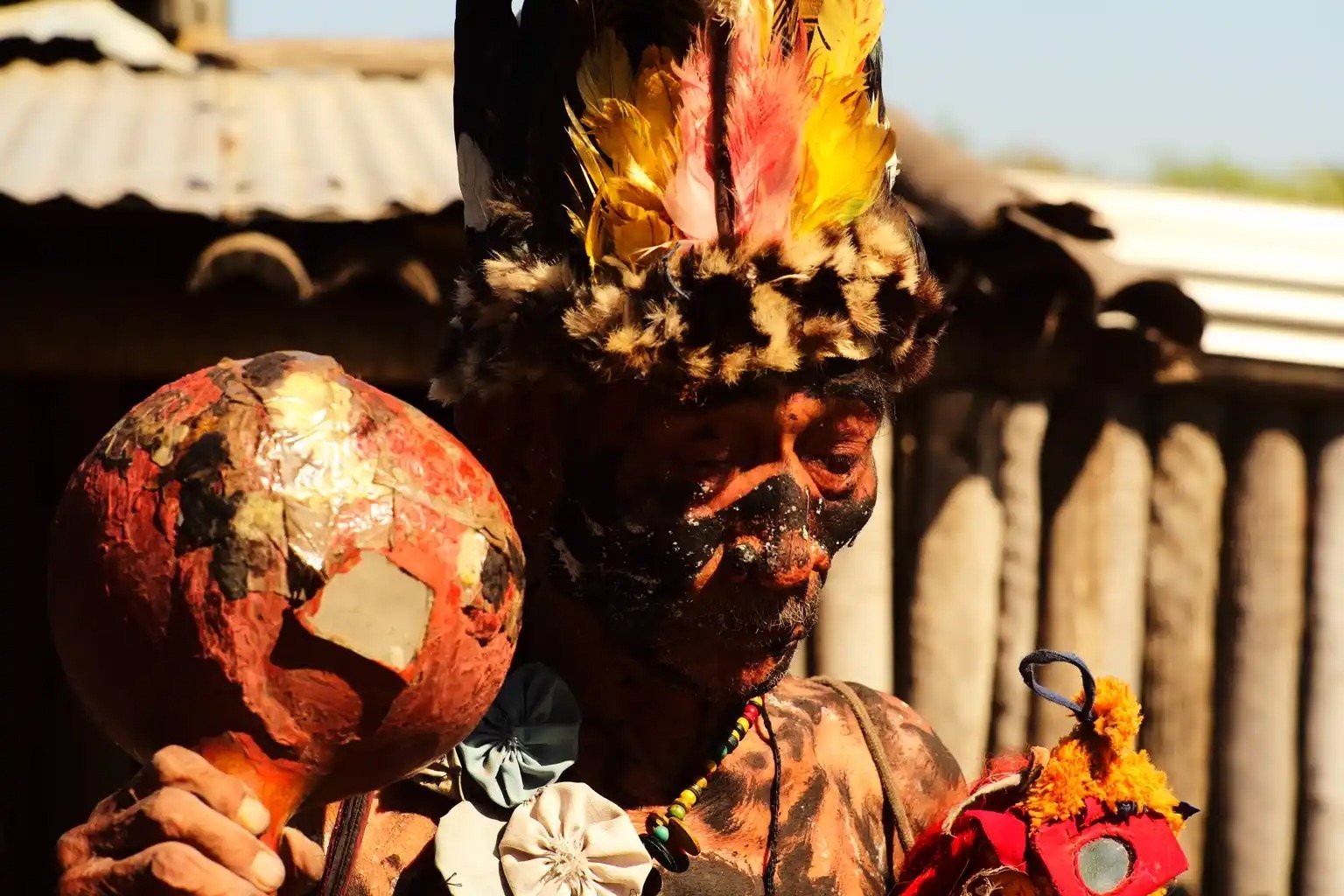
Among the peoples of the Gran Chaco, the feather art of the Ishir is an exception: according to the ethnologist Donatella Saviola Nobili (Museo Pigorini, Rome), it can be compared with that of the Amazonian peoples.
Rhea-feather belts, headbands and crowns, wristbands and anklets, earrings and ornaments that also dress arrows, axes, bags and fans. The most-used feathers are from rhea, muscovy duck, dove and parrot.
They are not souvenirs: they have meaning within their myth and their ceremonial life. That is why they are looked at, talked about and learned from, but not requested as a spectacle.
Craft and hands
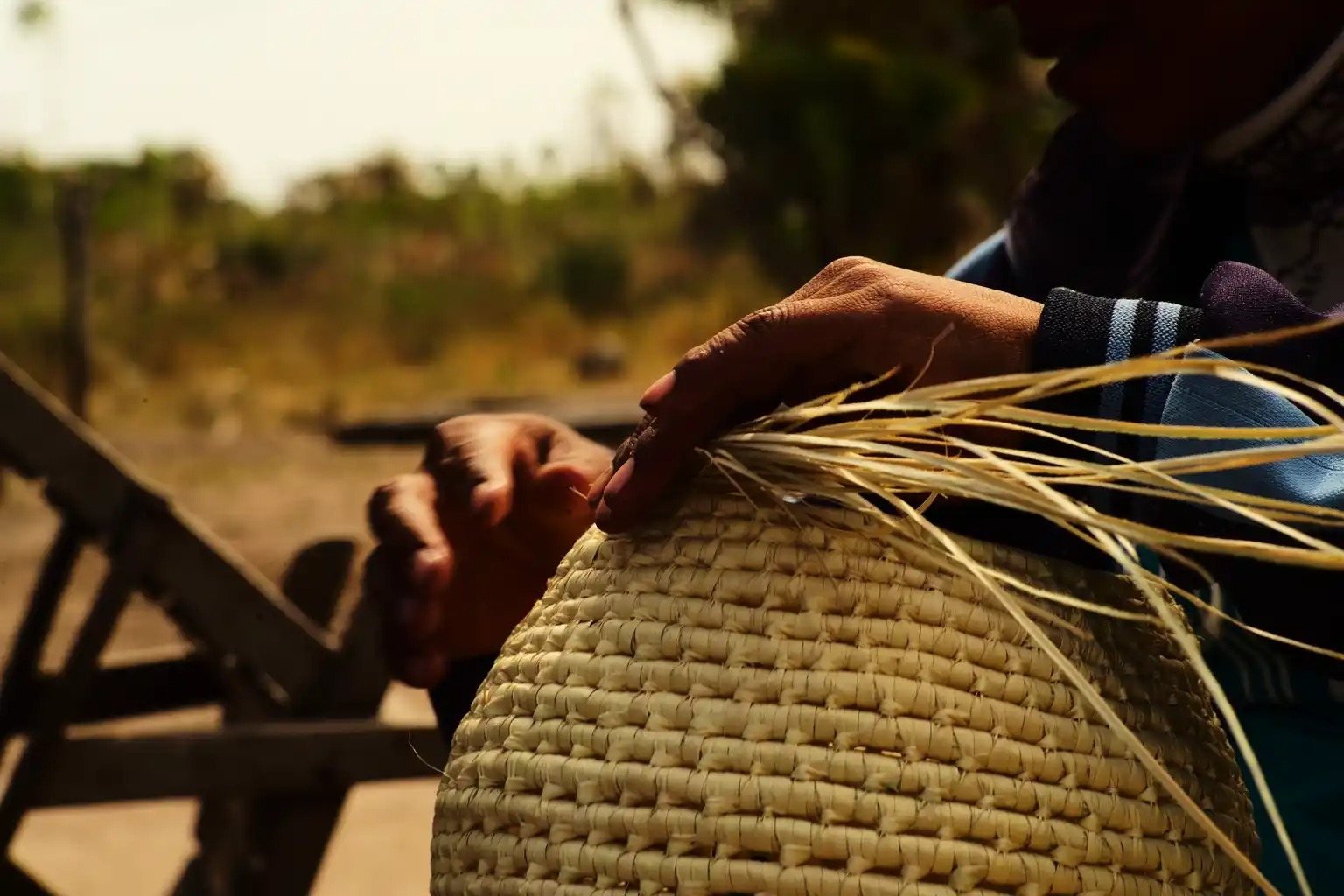
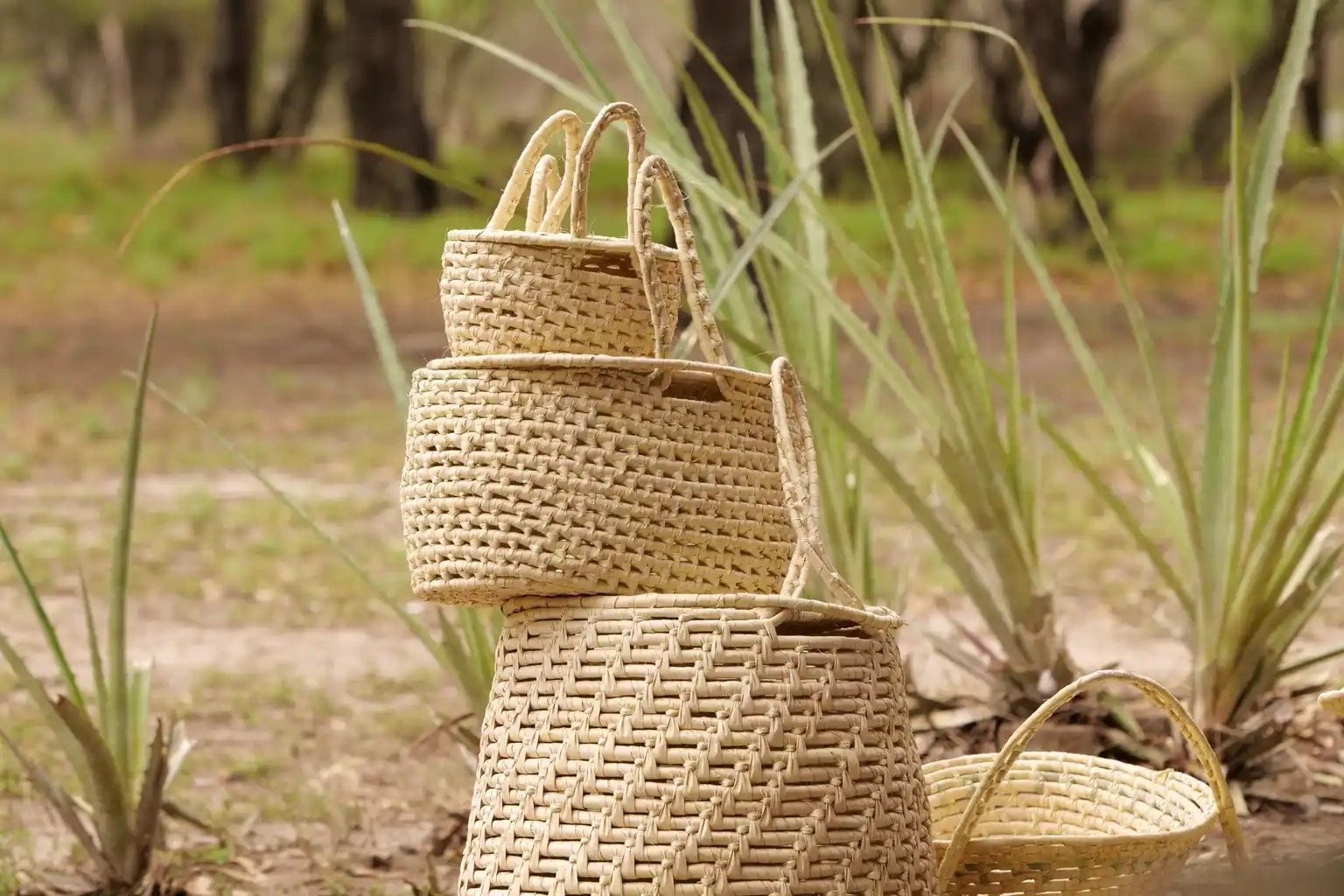
The men gather the karanda’y leaves (Copernicia alba); the women cut them and dry them in the sun for about three days. It is woven by hand, without needles or thread, in a technique similar to crochet, and in the morning, because in the heat the leaves break.
From this come baskets, hats, bread baskets and table centrepieces. It is a craft that takes a long time and earns little. That is why purchases are made directly from the person who wove the piece, at a price agreed with her.
The visit, step by step
A proposed route, with time and without a show. The final outline is agreed with the community for each departure.
We land unhurriedly in the far north of the Chaco. Rest, an introduction to the host and a brief conversation about how a guest behaves: what you ask, what you photograph and what you do not.
The encounter begins by greeting the caciques. You do not enter a village: you are received in it.
Karcha Bahlut (Puerto 14 de Mayo), about 20 km from Bahía Negra, or another community depending on the season and what their families decide. Conversation, history, language and time with no programme.
Karanda’y weaving with the craftswomen and conversation about feather art. You learn by watching. Purchases are made directly from the person who made the piece.
A boat trip on the Paraguay River, the one that according to the myth Nemur created, and, as night falls, the sky of the Pantanal. A visit to the Bahía Negra observatory completes the day.
A simple close with the community, with no speeches or compulsory group photo, and the return.
Formats
Starting points, not packages. Dates, group sizes and programme are defined with the community before each departure.
Bahía Negra, a Yshir village, weaving and feather art, a boat trip on the river and the Pantanal sky. The essential format.
More time in the village, a second community if they wish, and an extension to the Pantanal, with the Los Tres Gigantes Station, reachable only by boat.
Bahía Negra is about 830 km from Asunción. According to the official data available, there is a weekly scheduled flight of about two hours and an overland route of 13 to 21 hours that depends on the rain. We organise the journey around them or with our own transfer.
Flights, roads, times and the state of the river are reconfirmed before each departure. Nothing described is guaranteed without the community's decision.
The detail
What makes the journey respectful for them and memorable for you.
Everything begins with their permission and their welcome.
Few people per visit, in the number the community considers appropriate.
We ask before every image, and there are places and people who are not photographed.
Crafts bought from the person who wove them, without intermediaries and at an agreed price.
A boat trip and an open night, with the Yshir gaze on the firmament.
Planned for river floods, rain or community decisions.
Our standard
Ceremonies, like the great annual ritual of the Ishir, belong to the community. We neither schedule them nor promise them: if we are ever invited, it will be their decision.
You do not visit the Yshir: you accept their invitation.
Let us begin
Every encounter is prepared in advance and agreed with the community. Tell us who is travelling, when and what you would like to understand; a SAPC adviser will contact you personally.
No packages. No fixed itineraries.